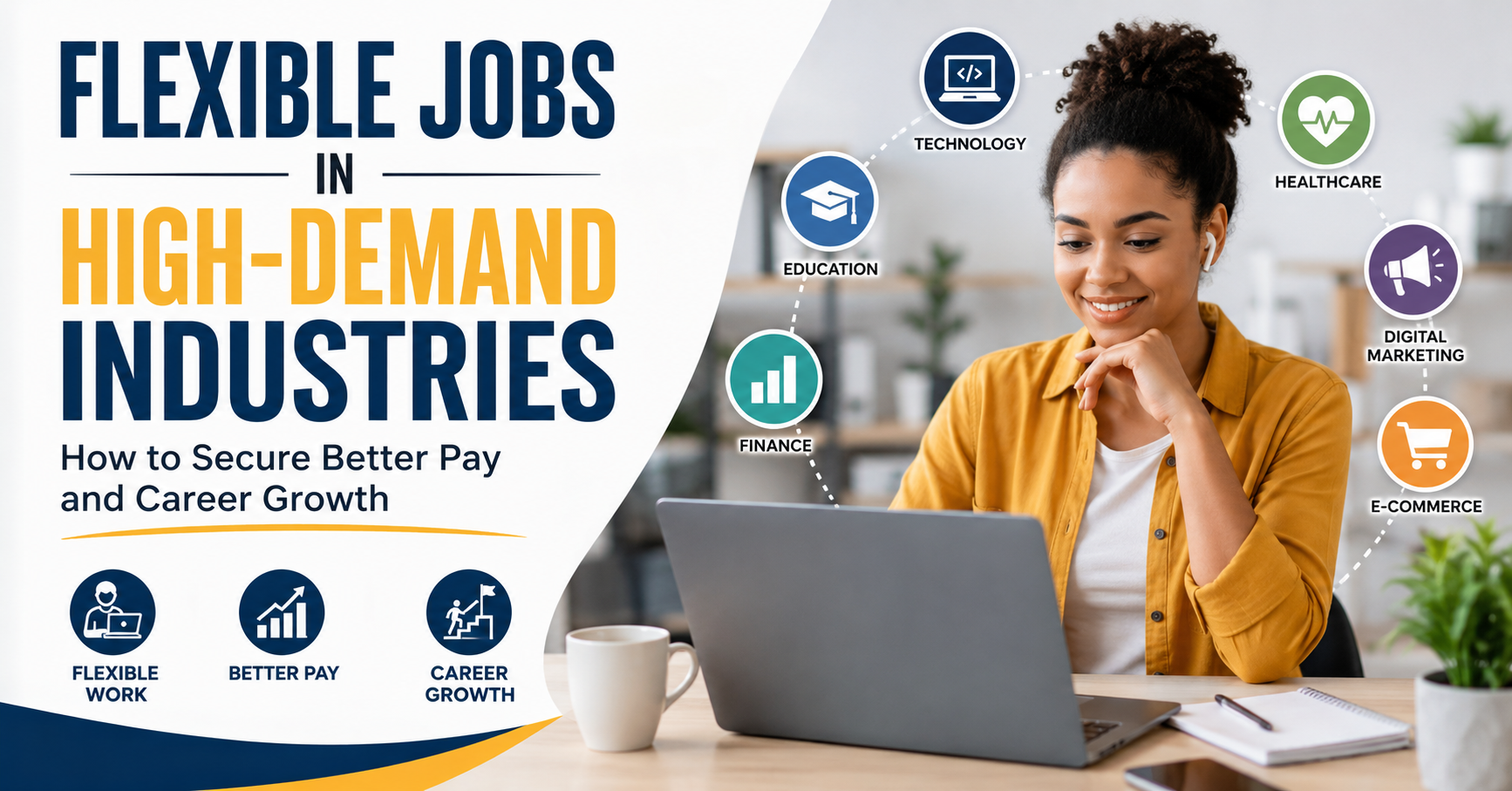
Discover the best flexible jobs in high-demand industries, learn the skills employers value, explore salary expectations, and find practical strategies to build a rewarding career with greater flexibility.
The modern workplace has changed dramatically over the past few years. Flexible jobs, once considered a niche employment option, have become a preferred way of working for millions of professionals worldwide. Businesses are increasingly embracing remote work, hybrid schedules, flexible hours, and project-based employment to attract and retain skilled talent.
For job seekers, this shift presents exciting opportunities. Whether you’re entering the workforce, changing careers, returning after a break, or looking to increase your income, flexible jobs in high-demand industries can provide competitive salaries, improved work-life balance, and long-term career growth.
The key is knowing where demand is strongest, what employers expect, and how to position yourself as a competitive candidate. Many of today’s fastest-growing industries value practical skills, adaptability, and continuous learning just as much as formal education.
In this guide, you’ll discover the industries offering the best flexible career opportunities, the skills that can help you earn more, and practical strategies for securing higher-paying roles while building a sustainable career.
Why Flexible Jobs Are Becoming More Valuable
Flexible work has evolved beyond simply working from home. Today’s employers recognize that offering flexibility can improve productivity, employee satisfaction, and talent retention.
Flexible jobs may include:
- Remote positions
- Hybrid work arrangements
- Flexible daily schedules
- Freelance opportunities
- Contract-based employment
- Part-time professional roles
- Compressed workweeks
- Results-oriented positions
Instead of measuring employees solely by the number of hours spent in an office, many organizations increasingly focus on outcomes, collaboration, and performance.
This shift benefits both employers and employees by creating opportunities for greater efficiency and wider access to skilled professionals regardless of location.
Benefits of Flexible Jobs
Flexible employment offers advantages that extend well beyond convenience.
Better Work-Life Balance
Flexible schedules allow professionals to better manage family responsibilities, education, health appointments, and personal commitments without sacrificing career progression.
Access to More Opportunities
Remote and hybrid roles allow candidates to apply for positions outside their immediate geographic area, significantly expanding the number of potential employers.
Competitive Salaries
Many industries now offer flexible positions with salaries comparable to traditional office-based roles, particularly for specialized professionals with in-demand skills.
Career Development
Flexible work environments often encourage independent problem-solving, digital collaboration, and project management—valuable skills that support long-term career advancement.
Reduced Commuting Costs
Working remotely or following a hybrid schedule can reduce transportation expenses, save time, and lower daily work-related costs.
Characteristics of High-Demand Industries
High-demand industries share several important characteristics.
They often experience:
- Rapid technological advancement
- Ongoing talent shortages
- Strong business investment
- Continuous hiring
- Competitive compensation packages
- Opportunities for professional development
- Flexible employment models
Because employers compete for qualified professionals, many are willing to offer flexible work arrangements alongside attractive compensation and career growth opportunities.
Best High-Demand Industries Offering Flexible Jobs
1. Information Technology (IT)
Technology remains one of the strongest sectors for flexible employment.
Organizations require professionals who can develop software, manage infrastructure, analyze data, strengthen cybersecurity, and support digital transformation projects.
Common flexible IT roles include:
- Software Developer
- Web Developer
- Cloud Engineer
- Systems Administrator
- Cybersecurity Analyst
- Data Analyst
- DevOps Engineer
- IT Support Specialist
Many technology companies operate with distributed teams, making remote collaboration a standard practice rather than an exception.
Professionals with current technical skills often benefit from strong salary potential and numerous advancement opportunities.
2. Healthcare Administration and Digital Health
Healthcare extends far beyond hospitals and clinical care.
Administrative, technical, and digital healthcare roles increasingly support flexible work arrangements.
Examples include:
- Medical Coding
- Medical Billing
- Healthcare Data Analysis
- Telehealth Coordination
- Health Information Management
- Healthcare Project Management
- Clinical Documentation Improvement
As healthcare systems continue adopting digital technologies, professionals who combine healthcare knowledge with administrative or technical expertise remain in strong demand.
3. Financial Services
Financial institutions continue investing heavily in digital banking, financial technology, regulatory compliance, and customer service.
Flexible positions include:
- Financial Analyst
- Compliance Specialist
- Risk Analyst
- Accountant
- Payroll Specialist
- Financial Planning Assistant
- Investment Operations Support
Professionals with analytical skills, attention to detail, and familiarity with financial software often find attractive opportunities across banks, insurance companies, consulting firms, and fintech organizations.
4. Digital Marketing
Digital marketing offers one of the broadest ranges of flexible career opportunities.
Businesses of every size require professionals who can improve online visibility, attract customers, and generate revenue.
Popular roles include:
- SEO Specialist
- Content Writer
- Content Strategist
- Social Media Manager
- Email Marketing Specialist
- PPC Campaign Manager
- Marketing Analyst
- Copywriter
Performance is often measured by campaign results rather than physical office attendance, making digital marketing especially suitable for remote and hybrid work.
5. Customer Success and Customer Support
Modern customer service has evolved into strategic customer relationship management.
Many companies now operate fully remote customer support teams that assist clients through phone, email, chat, and video platforms.
Career paths include:
- Customer Success Manager
- Technical Support Specialist
- Client Relationship Manager
- Customer Experience Specialist
- Account Coordinator
Strong communication skills and problem-solving abilities are highly valued in these positions.
6. Education and Online Learning
The growth of digital learning platforms has expanded flexible career options for educators and learning professionals.
Examples include:
- Online Tutor
- Instructional Designer
- Curriculum Developer
- Learning Experience Designer
- Educational Consultant
- Corporate Trainer
Organizations increasingly invest in employee development, creating opportunities for professionals with expertise in education, instructional technology, and workforce training.
7. Human Resources
Human resources departments increasingly support remote hiring, digital onboarding, employee engagement, and workforce planning.
Flexible HR careers include:
- Recruiter
- Talent Acquisition Specialist
- HR Coordinator
- Learning and Development Specialist
- Compensation Analyst
- Employee Experience Manager
As organizations compete for skilled talent, experienced HR professionals remain valuable across industries.
Industries Expected to Continue Growing
While no industry is entirely immune to economic change, several sectors continue showing strong long-term employment potential because they address ongoing business and societal needs.
These include:
- Artificial intelligence and automation
- Cloud computing
- Cybersecurity
- Renewable energy
- Healthcare technology
- Financial technology (FinTech)
- Data analytics
- E-commerce
- Supply chain management
- Digital marketing
- Professional consulting
Developing relevant skills for these industries can improve both earning potential and long-term career stability.
Skills Employers Value Most
Employers hiring for flexible positions often look beyond technical expertise alone.
Candidates who demonstrate a combination of technical and professional skills frequently stand out during the hiring process.
Some of the most valued skills include:
Digital Communication
Remote collaboration requires clear written and verbal communication using email, messaging platforms, and video conferencing tools.
Time Management
Flexible work often involves greater independence. Employers value professionals who can prioritize tasks, meet deadlines, and manage workloads effectively.
Problem-Solving
Organizations seek employees who can identify challenges, evaluate solutions, and make informed decisions without constant supervision.
Adaptability
Technology and business needs change rapidly. Professionals who embrace learning and adjust to new systems remain highly competitive.
Project Management
Even entry-level professionals benefit from understanding project planning, organization, documentation, and progress tracking.
Data Literacy
Many roles increasingly involve interpreting reports, dashboards, and business metrics to support informed decision-making.
Why Continuous Learning Matters
One of the defining characteristics of high-demand industries is continuous change.
New technologies, evolving regulations, and shifting customer expectations mean that successful professionals regularly update their knowledge.
Learning does not always require earning another degree. Many employers value practical experience gained through professional certificates, online courses, workshops, portfolio projects, and hands-on problem-solving.
Individuals who consistently build new skills are often better positioned for promotions, salary increases, and leadership opportunities.
Highest-Paying Flexible Jobs Across High-Demand Industries
One of the biggest misconceptions about flexible work is that it automatically means lower pay. In reality, many employers offer highly competitive salaries for professionals who possess specialized skills and can consistently deliver results.
While compensation varies depending on experience, location, industry, and employer, the following careers are widely recognized for offering strong earning potential alongside flexible work arrangements.
Software Developer
Software developers design, build, test, and maintain applications used by businesses and consumers. Because software development is largely computer-based, many organizations offer fully remote or hybrid positions.
Professionals in this field may specialize in:
- Front-end development
- Back-end development
- Mobile applications
- Cloud solutions
- Enterprise software
- Artificial intelligence applications
As experience grows, developers often progress into senior engineering, technical leadership, or software architecture roles.
Data Analyst
Organizations rely on data to improve decision-making, understand customer behavior, and optimize operations.
Data analysts gather, organize, and interpret information using spreadsheets, databases, visualization software, and business intelligence tools.
Employers value professionals who can transform complex data into clear business insights.
Career progression may include:
- Senior Data Analyst
- Business Intelligence Analyst
- Analytics Manager
- Data Scientist
Cybersecurity Specialist
As digital threats continue to evolve, organizations invest heavily in protecting sensitive information.
Cybersecurity professionals help secure systems, identify vulnerabilities, monitor networks, and respond to security incidents.
Many cybersecurity teams operate remotely because monitoring and analysis can be performed securely from distributed locations.
Popular specialties include:
- Security Operations
- Cloud Security
- Risk Assessment
- Identity Management
- Penetration Testing
- Governance and Compliance
Digital Marketing Manager
Businesses increasingly depend on online marketing to generate leads, increase sales, and strengthen brand awareness.
Digital marketing managers coordinate multiple strategies, including:
- Search engine optimization (SEO)
- Content marketing
- Paid advertising
- Email campaigns
- Analytics
- Conversion optimization
Because campaign performance can be measured digitally, flexible work arrangements are common in this profession.
Financial Analyst
Financial analysts evaluate budgets, investments, financial performance, and business opportunities.
Remote financial analysis has become increasingly common thanks to cloud-based financial software and secure collaboration tools.
Professionals with expertise in forecasting, budgeting, and financial modeling remain highly sought after.
Project Manager
Nearly every industry needs professionals who can coordinate projects, manage timelines, communicate with stakeholders, and deliver successful outcomes.
Project managers often oversee distributed teams working across multiple locations and time zones.
Industries hiring flexible project managers include:
- Technology
- Construction
- Healthcare
- Finance
- Manufacturing
- Consulting
- Marketing
UX/UI Designer
User experience (UX) and user interface (UI) designers help create websites and applications that are easy to use and visually appealing.
These professionals conduct research, create prototypes, and collaborate with developers to improve digital products.
Portfolio quality often carries significant weight during hiring.
Skills That Increase Your Earning Potential
Developing in-demand skills can significantly improve both salary prospects and career opportunities.
Some of the most valuable skills include:
Artificial Intelligence Literacy
Professionals who understand how AI tools improve productivity are increasingly valuable across industries.
Learning how to use AI responsibly for research, automation, writing assistance, coding, or workflow optimization can enhance productivity without replacing human expertise.
Cloud Computing
Cloud platforms support modern business operations.
Knowledge of cloud technologies can benefit professionals working in IT, cybersecurity, software development, finance, and business operations.
Data Analysis
Even professionals outside technical roles benefit from understanding:
- Microsoft Excel
- Data visualization
- Business reporting
- Dashboard interpretation
- Basic statistics
Data-driven decision-making continues to influence hiring across industries.
Communication
Strong communication remains one of the highest-paying professional skills.
Employers consistently seek candidates who can:
- Explain complex ideas clearly
- Collaborate across teams
- Present information confidently
- Build positive client relationships
- Resolve workplace challenges professionally
Leadership
Leadership is valuable even before reaching management positions.
Employees who mentor colleagues, coordinate projects, solve problems proactively, and demonstrate accountability often become strong candidates for promotions.
Certifications That Can Strengthen Your Resume
Although certifications are not always required, they can demonstrate initiative and current knowledge.
Examples include certifications related to:
- Project management
- Cloud computing
- Cybersecurity
- Digital marketing
- Human resources
- Financial analysis
- Data analytics
- Customer relationship management
When choosing a certification, prioritize programs that align with your desired career path and are recognized within your industry.
How to Find High-Quality Flexible Jobs
Finding legitimate opportunities requires more than submitting applications at random.
A focused strategy can improve both interview invitations and long-term career outcomes.
Build a Professional Resume
Your resume should highlight measurable accomplishments rather than simply listing responsibilities.
Instead of writing:
“Managed customer inquiries.”
Consider:
“Resolved customer inquiries while consistently maintaining high customer satisfaction scores and meeting response-time targets.”
Whenever possible, include numbers that demonstrate impact.
Examples include:
- Revenue increased
- Costs reduced
- Projects completed
- Customers served
- Efficiency improvements
- Team leadership experience
Create a Strong Online Professional Profile
Many recruiters actively search for candidates online.
A complete professional profile should include:
- Current experience
- Skills
- Certifications
- Portfolio links (where applicable)
- Professional summary
- Recent accomplishments
Maintaining an updated profile can increase visibility for new opportunities.
Build a Portfolio
Portfolios are valuable for many careers, including:
- Writing
- Graphic design
- Software development
- UX/UI design
- Marketing
- Data analysis
- Project management
Even personal projects can demonstrate initiative and practical skills when professional experience is limited.
Tailor Every Application
Employers often receive hundreds of applications for a single opening.
Carefully reviewing the job description and adapting your resume to emphasize relevant experience can significantly improve your chances of progressing through applicant screening systems.
Network Professionally
Networking remains one of the most effective ways to discover opportunities.
Professional networking can include:
- Industry conferences
- Online communities
- Alumni associations
- Professional organizations
- Virtual events
- Mentorship programs
Building genuine relationships often leads to referrals and career advice.
Remote, Hybrid, or Freelance: Which Option Is Right for You?
Flexible work comes in several forms, each with its own advantages.
Remote Work
Remote employees work primarily outside a traditional office.
Advantages include:
- Greater geographic freedom
- Reduced commuting
- Flexible environments
- Broader job market access
Challenges may include maintaining work-life boundaries and staying connected with colleagues.
Hybrid Work
Hybrid roles combine office attendance with remote work.
Benefits include:
- Face-to-face collaboration
- Flexible scheduling
- Access to workplace resources
- Opportunities for relationship building
Hybrid arrangements appeal to professionals who value both flexibility and in-person interaction.
Freelance Work
Freelancers typically work independently for multiple clients.
Potential advantages include:
- Schedule flexibility
- Diverse projects
- Income diversification
- Greater independence
However, freelancers are generally responsible for finding clients, managing taxes, and handling their own benefits.
Preparing for Flexible Job Interviews
Interviewing for flexible positions often involves additional questions about communication, organization, and self-management.
Employers may ask:
- How do you prioritize competing deadlines?
- How do you stay productive while working remotely?
- How do you communicate with distributed teams?
- How do you manage projects independently?
Prepare examples that demonstrate:
- Initiative
- Collaboration
- Accountability
- Problem-solving
- Adaptability
- Professional communication
Using real examples from previous work, education, volunteer experience, or personal projects can strengthen your responses.
Negotiating Better Pay
Salary negotiation can feel intimidating, but preparation makes a significant difference.
Before discussing compensation:
- Research typical salary ranges for similar positions.
- Consider your skills, certifications, and experience.
- Be prepared to explain the value you bring to the organization.
- Evaluate the complete compensation package, including benefits, professional development opportunities, flexible scheduling, retirement plans, bonuses, and paid leave.
Approaching negotiations professionally and respectfully can lead to improved compensation while establishing a positive working relationship.
Common Mistakes to Avoid
Many qualified candidates unintentionally reduce their chances of success.
Avoid these common mistakes:
- Applying for every position without considering fit.
- Sending the same resume to every employer.
- Ignoring the importance of communication skills.
- Neglecting continuous learning.
- Failing to prepare for interviews.
- Overlooking networking opportunities.
- Accepting the first offer without evaluating the full compensation package.
- Underestimating the value of transferable skills gained through previous jobs, volunteer work, or independent projects.
A thoughtful, strategic approach to your job search is often more effective than submitting a high volume of generic applications.
Building a Long-Term Career in Flexible Work
Landing a flexible job is only the beginning. The professionals who enjoy steady career progression and higher earnings are those who continue developing their skills, expanding their networks, and adapting to changes within their industries.
A long-term mindset helps you remain competitive regardless of economic conditions or technological advancements.
Invest in Lifelong Learning
Industries evolve quickly, particularly those driven by technology and innovation. Setting aside time each month to learn new tools, strengthen existing skills, or explore emerging trends can help you stay relevant.
Learning opportunities may include:
- Professional certifications
- Online courses
- Industry webinars
- Workshops
- Conferences
- Employer-sponsored training
- Independent projects that showcase practical abilities
The goal is consistent improvement rather than trying to master everything at once.
Build a Strong Professional Reputation
Your reputation can become one of your greatest career assets.
Whether you work remotely, in a hybrid role, or as a freelancer, employers and clients value professionals who are dependable, collaborative, and committed to producing quality work.
You can strengthen your professional reputation by:
- Meeting deadlines consistently
- Communicating clearly and respectfully
- Taking ownership of your work
- Delivering reliable results
- Being open to constructive feedback
- Supporting colleagues when appropriate
Positive professional relationships often lead to repeat opportunities, referrals, and promotions.
Develop Leadership Skills Early
Leadership is not limited to management positions.
Employers appreciate individuals who:
- Take initiative
- Solve problems proactively
- Help improve processes
- Mentor colleagues
- Coordinate projects
- Communicate effectively across teams
Developing these abilities can prepare you for senior roles with greater responsibilities and compensation.
Stay Informed About Industry Trends
Understanding where your industry is heading allows you to prepare for future opportunities rather than simply reacting to change.
Regularly following reputable industry publications, professional organizations, and business news can help you identify:
- Emerging technologies
- New regulations
- Hiring trends
- Skill shortages
- Growing specializations
- Market demands
Being proactive allows you to make informed career decisions.
The Future of Flexible Work
Flexible work is expected to remain an important part of the global employment landscape.
Organizations continue investing in digital collaboration tools, secure remote work technologies, and distributed teams. Rather than viewing flexibility as a temporary benefit, many employers now consider it an important component of talent attraction and retention.
Several trends are likely to influence flexible careers over the coming years.
Greater Demand for Digital Skills
As businesses continue adopting digital solutions, professionals with strong technical and analytical skills are expected to remain in high demand.
Even non-technical roles increasingly require familiarity with collaboration platforms, data analysis, and digital communication tools.
Increased Focus on Results
Many employers now prioritize measurable outcomes over physical presence.
Professionals who consistently deliver quality work, communicate effectively, and manage their responsibilities independently may benefit from greater workplace flexibility.
Cross-Functional Collaboration
Modern organizations often bring together professionals from multiple departments to solve business challenges.
The ability to collaborate across different functions—including marketing, technology, finance, operations, and customer service—can become a valuable career advantage.
Continuous Adaptation
Industries will continue evolving due to technological innovation, changing customer expectations, and economic developments.
Professionals who embrace change and continue learning are generally better positioned for long-term success.
Frequently Asked Questions
What are flexible jobs?
Flexible jobs are positions that offer alternative working arrangements compared with traditional office schedules. These may include remote work, hybrid roles, flexible hours, compressed workweeks, contract positions, freelance opportunities, or part-time professional employment.
Which industries offer the most flexible jobs?
Many industries now provide flexible opportunities, including:
- Information technology
- Healthcare administration
- Financial services
- Digital marketing
- Customer success
- Human resources
- Education and online learning
- Project management
- Data analytics
- Professional consulting
The availability of flexible work depends on the specific employer and role.
Do flexible jobs pay well?
Many flexible positions offer competitive compensation, especially for professionals with in-demand skills, relevant experience, and strong performance records.
Compensation varies based on factors such as industry, location, responsibilities, experience, and employer.
Can beginners find flexible jobs?
Yes. Entry-level opportunities exist across many industries, particularly in customer support, administrative services, marketing, sales, technology support, education, and content creation.
Building practical skills, gaining experience through projects or internships, and tailoring applications to each role can improve your chances of securing an entry-level position.
What skills are most important for flexible work?
Frequently requested skills include:
- Communication
- Time management
- Digital literacy
- Problem-solving
- Organization
- Collaboration
- Adaptability
- Critical thinking
- Project management
- Analytical skills
The specific skills required will depend on the role and industry.
How can I improve my chances of getting hired?
Consider these practical steps:
- Keep your resume updated.
- Tailor each application to the job description.
- Develop relevant technical and professional skills.
- Build a portfolio where appropriate.
- Prepare thoroughly for interviews.
- Expand your professional network.
- Continue learning throughout your career.
Final Thoughts
Flexible jobs are no longer limited to a small number of industries or specialized roles. They have become an integral part of the modern workforce, offering professionals greater choice in how and where they work while creating new pathways for career growth.
Whether your goal is earning a higher salary, achieving a better work-life balance, changing careers, or developing new skills, opportunities exist across a wide range of high-demand industries. Success comes from understanding market needs, investing in continuous learning, demonstrating professionalism, and adapting to changing workplace expectations.
Rather than focusing solely on finding any flexible job, prioritize positions that align with your long-term career goals, strengths, and interests. By developing valuable skills, building a strong professional reputation, and remaining open to growth, you can create a rewarding career that offers both flexibility and stability in an evolving job market.
Key Takeaways
- Flexible work opportunities continue to expand across many high-demand industries.
- Employers increasingly value practical skills, adaptability, and measurable results.
- Technology, healthcare, finance, digital marketing, customer success, and education remain strong sectors for flexible careers.
- Continuous learning helps professionals remain competitive in evolving industries.
- Tailored resumes, professional networking, and interview preparation improve hiring prospects.
- Career growth depends on consistently developing skills, maintaining professionalism, and delivering high-quality work.
- Flexible careers can provide competitive compensation alongside improved work-life balance.

Leave a Reply