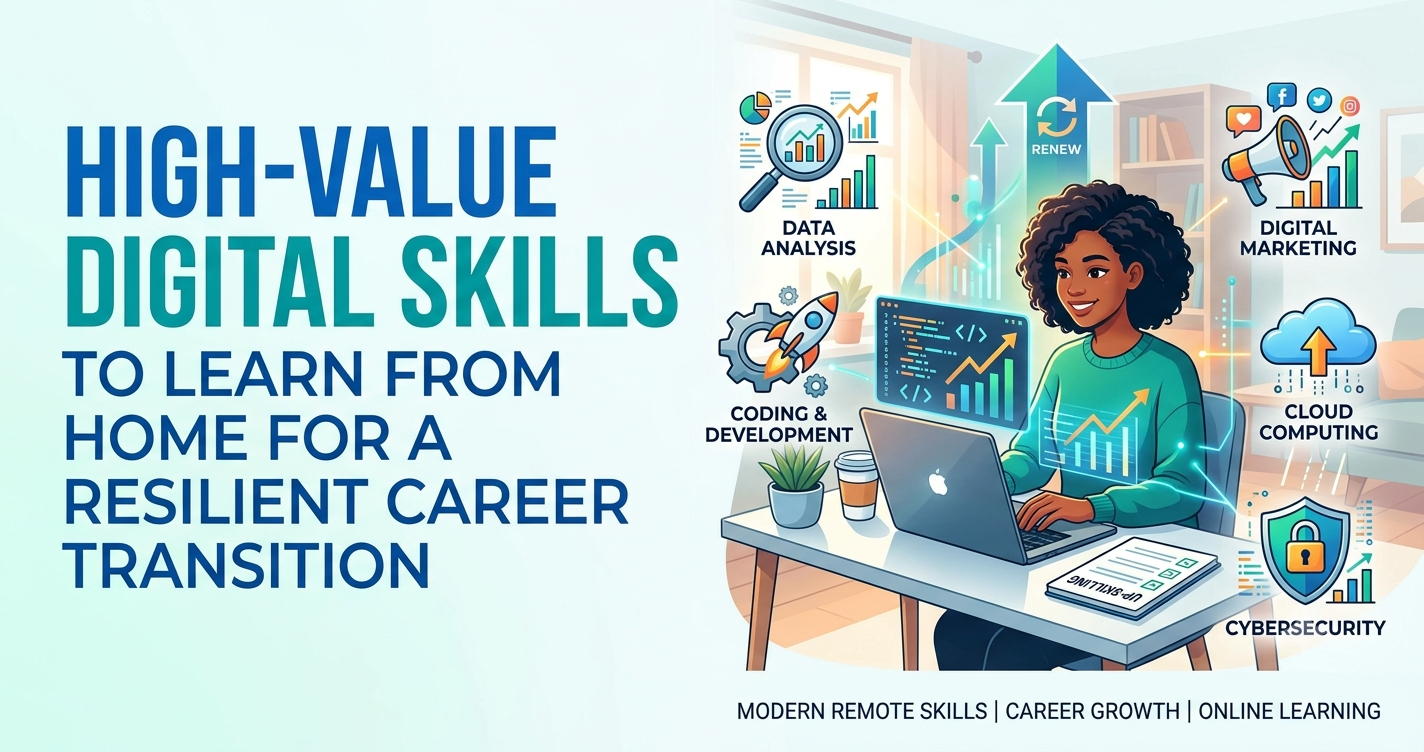
Build future-ready expertise, increase your earning potential, and prepare for long-term career success in a rapidly changing job market.
Introduction
The way people build careers has changed dramatically over the past decade. Advances in technology, remote work opportunities, automation, and the global digital economy have transformed how businesses hire talent and how professionals develop their careers. Today, employers increasingly value practical digital skills that can be applied across industries, whether you are seeking full-time employment, freelance opportunities, or starting your own online business.
For many professionals, career transitions are no longer optional—they are becoming part of long-term career planning. Industries evolve, new technologies emerge, and workplace demands continue to shift. Learning relevant digital skills from home provides an accessible way to adapt to these changes while creating opportunities for professional growth.
One of the greatest advantages of digital skills is flexibility. Many can be learned online through structured courses, hands-on projects, and consistent practice without requiring expensive equipment or formal university degrees. Employers often prioritize demonstrated abilities, strong portfolios, and practical experience alongside traditional qualifications.
This guide explores some of the most valuable digital skills you can begin learning from home. You’ll discover why these skills are in demand, how they contribute to career resilience, where they can lead professionally, and practical tips for getting started.
Why Digital Skills Matter More Than Ever
Organizations across healthcare, finance, education, retail, manufacturing, marketing, logistics, cybersecurity, and technology rely heavily on digital tools to operate efficiently. As businesses continue embracing digital transformation, professionals with adaptable technical and analytical capabilities are becoming increasingly valuable.
Developing digital skills offers several long-term advantages:
- Greater career flexibility across industries
- Increased eligibility for remote and hybrid positions
- Opportunities for freelance and consulting work
- Improved long-term employability
- Enhanced problem-solving and productivity
- Access to higher-paying specialized roles
- Better adaptability during economic or industry changes
Rather than depending on a single career path, professionals with transferable digital skills can pursue multiple opportunities throughout their careers.
Choosing the Right Skill for Your Career Goals
Not every digital skill is suitable for every learner. Before committing to a learning path, consider your interests, strengths, preferred work style, and long-term objectives.
Ask yourself:
- Do you enjoy solving technical problems?
- Would you rather create visual content or analyze data?
- Do you prefer working independently or collaborating with teams?
- Are you interested in freelancing or traditional employment?
- Do you enjoy writing, designing, programming, or strategy?
Answering these questions can help narrow your focus and increase your motivation to continue learning.
1. Data Analytics
Why It Is Valuable
Organizations generate enormous amounts of information every day. Turning raw data into meaningful insights helps businesses improve operations, understand customers, forecast trends, and make informed decisions.
Professionals who can collect, organize, analyze, and communicate data effectively are in demand across many industries, including healthcare, finance, retail, manufacturing, logistics, consulting, education, and government.
Core Skills to Learn
Focus on developing competencies such as:
- Spreadsheet analysis
- Data visualization
- Statistical thinking
- Database fundamentals
- Dashboard creation
- Business reporting
- Data storytelling
Common tools include spreadsheets, SQL databases, visualization software, and introductory programming for data analysis.
Career Opportunities
Data-related skills can support roles such as:
- Data Analyst
- Business Analyst
- Reporting Analyst
- Operations Analyst
- Marketing Analyst
- Financial Analyst
- Product Analyst
These roles often provide clear career progression and opportunities to specialize further over time.
2. Cybersecurity
Growing Importance
As businesses become increasingly connected, protecting digital systems has become a strategic priority. Organizations must safeguard sensitive information, maintain customer trust, and reduce operational risks associated with cyber threats.
Cybersecurity professionals help prevent attacks, identify vulnerabilities, strengthen security policies, and respond to incidents.
Because nearly every industry relies on digital infrastructure, cybersecurity expertise remains relevant across sectors.
Key Topics to Study
Beginners should understand:
- Computer networks
- Operating systems
- Identity management
- Password security
- Multi-factor authentication
- Risk management
- Security awareness
- Threat detection
- Incident response
- Cloud security fundamentals
Building strong foundational knowledge creates opportunities for more advanced certifications later.
Career Paths
Potential roles include:
- Security Analyst
- Security Operations Specialist
- Information Security Coordinator
- Risk Analyst
- Compliance Specialist
- Identity and Access Management Professional
3. Cloud Computing
Why Cloud Skills Continue Growing
Modern organizations increasingly rely on cloud-based infrastructure to improve scalability, collaboration, and operational efficiency. Instead of maintaining physical servers on-site, businesses use cloud platforms to store information, run applications, and manage digital services.
As cloud adoption continues across industries, professionals with cloud knowledge remain highly valuable.
Essential Learning Areas
Topics include:
- Cloud infrastructure basics
- Virtual machines
- Cloud storage
- Networking fundamentals
- Identity and permissions
- Cost optimization
- Monitoring
- Backup strategies
- Disaster recovery
- Cloud security
Understanding these concepts creates opportunities to support organizations undergoing digital transformation.
Possible Career Options
Cloud skills complement roles such as:
- Cloud Support Associate
- Systems Administrator
- Infrastructure Analyst
- DevOps Support
- Cloud Operations Specialist
- Technical Consultant
4. Artificial Intelligence and Machine Learning Fundamentals
Understanding the Opportunity
Artificial intelligence continues to influence industries ranging from healthcare and finance to customer service, logistics, manufacturing, and education.
While advanced AI research requires significant expertise, many professionals benefit simply from understanding how AI tools work, where they can be applied responsibly, and how to collaborate with AI-powered systems.
Learning AI fundamentals can complement careers in analytics, software development, marketing, business strategy, and product management.
Beginner Learning Topics
Start with:
- Machine learning basics
- Data preparation
- AI ethics
- Predictive models
- Natural language processing concepts
- Automation workflows
- Responsible AI practices
Developing foundational knowledge allows learners to understand how organizations implement AI without needing advanced mathematics from the outset.
5. Digital Marketing
A Skill Relevant Across Every Industry
Nearly every business needs an online presence. Whether selling products, offering professional services, or building brand awareness, organizations rely on digital marketing to reach customers.
Digital marketing combines creativity with analytical thinking, making it attractive to professionals from many backgrounds.
Skills Worth Learning
Develop experience in areas such as:
- Search engine optimization (SEO)
- Content marketing
- Email marketing
- Social media strategy
- Analytics
- Conversion optimization
- Paid advertising fundamentals
- Audience research
- Marketing automation
Because digital marketing continues evolving, successful professionals commit to ongoing learning and adapting to changing consumer behaviors.
Career Opportunities
Possible career paths include:
- Digital Marketing Specialist
- SEO Specialist
- Content Strategist
- Marketing Analyst
- Email Marketing Coordinator
- Marketing Automation Specialist
- Growth Marketing Associate
Building Practical Experience While Learning
Knowledge alone is rarely enough to stand out in today’s job market. Employers often look for practical evidence that candidates can apply what they have learned.
As you study, begin building a portfolio that demonstrates your growing abilities. Practical projects can include analyzing public datasets, creating marketing campaigns for fictional businesses, designing dashboards, documenting cloud environments, or developing simple automation workflows.
Volunteer projects, internships, freelance assignments, and personal initiatives can all contribute valuable experience. Even small projects completed consistently can showcase your willingness to learn and solve real-world problems.
Remember that progress comes from steady practice rather than trying to master everything at once. Focusing on one skill, completing meaningful projects, and continuously improving your portfolio often produces better long-term results than attempting to learn many unrelated technologies simultaneously.
6. Software Development
Why Programming Remains a Valuable Skill
Software powers everything from mobile applications and websites to banking systems, healthcare platforms, and business operations. As organizations continue investing in digital products and services, software development remains one of the most versatile career paths.
You do not need a computer science degree to begin learning programming. Many successful developers start with self-paced online courses, coding challenges, and personal projects before moving into professional roles.
Foundational Topics to Learn
Start with the basics before exploring specialized areas:
- Programming fundamentals
- Version control systems
- Problem-solving techniques
- Web development basics
- APIs and integrations
- Database concepts
- Testing and debugging
- Software development best practices
Choose one programming language initially and focus on mastering its core concepts before branching into others.
Career Opportunities
Software development skills can support careers such as:
- Junior Software Developer
- Front-End Developer
- Back-End Developer
- Full-Stack Developer
- Mobile Application Developer
- Web Developer
- Software Quality Assurance Analyst
These skills can also complement careers in automation, artificial intelligence, cybersecurity, and cloud computing.
7. UX/UI Design
Designing Better Digital Experiences
User Experience (UX) and User Interface (UI) design focus on making digital products intuitive, accessible, and enjoyable to use. Businesses increasingly recognize that well-designed websites and applications improve customer satisfaction, engagement, and retention.
Professionals in this field combine creativity with research and problem-solving to develop user-centered digital experiences.
Core Skills to Develop
Areas worth exploring include:
- User research
- Wireframing
- Prototyping
- Information architecture
- Accessibility principles
- Visual hierarchy
- Design systems
- Usability testing
Creating sample projects for fictional or real-world scenarios can help demonstrate your design thinking and technical skills.
8. Project Management
Coordinating Teams in a Digital Workplace
Technology projects often involve professionals from multiple departments working together toward shared goals. Effective project managers help teams stay organized, meet deadlines, manage budgets, and communicate clearly throughout each stage of a project.
Digital project management combines leadership, organization, communication, and technical understanding.
Skills That Employers Value
Key competencies include:
- Planning
- Scheduling
- Stakeholder communication
- Risk management
- Resource allocation
- Agile methodologies
- Scrum fundamentals
- Documentation
- Team collaboration
- Performance tracking
Project management knowledge can enhance careers in technology, healthcare, construction, finance, education, and many other sectors.
9. Technical Writing
Transforming Complex Information into Clear Communication
As businesses create increasingly sophisticated products and services, they need professionals who can explain technical concepts clearly to different audiences.
Technical writers develop user guides, documentation, knowledge bases, software manuals, training materials, and internal resources.
Strong communication skills combined with technical understanding create opportunities across many industries.
Important Skills
Focus on learning:
- Research methods
- Clear writing techniques
- Documentation standards
- Content organization
- Editing and proofreading
- Visual documentation
- Information design
- Collaboration with technical teams
This career path is especially suitable for individuals who enjoy writing, organization, and continuous learning.
10. Business Intelligence
Turning Information into Better Decisions
Business Intelligence (BI) professionals help organizations understand operational performance through reporting, dashboards, and analytics.
Rather than simply collecting data, BI specialists present information in ways that support strategic decision-making.
Skills to Build
Useful competencies include:
- Data visualization
- Dashboard creation
- Business reporting
- Performance metrics
- Database querying
- Forecasting
- Analytical thinking
Business Intelligence overlaps with analytics, finance, operations, and management, making it a valuable transferable skill.
Creating a Strong Digital Portfolio
Regardless of which digital skill you choose, your portfolio often becomes one of your most valuable career assets.
Instead of simply listing completed courses, demonstrate how you apply your knowledge through practical examples.
A strong portfolio may include:
- Personal projects
- Case studies
- Process documentation
- Sample reports
- Website designs
- Coding projects
- Marketing campaigns
- Data dashboards
- Research summaries
- Problem-solving examples
Employers generally appreciate candidates who can clearly explain how they approached challenges, what they learned, and how they improved over time.
Learning Effectively from Home
Learning remotely requires consistency more than perfection. Establishing a structured routine can help you maintain momentum and steadily build new skills.
Consider these practical strategies:
Set Clear Learning Goals
Define realistic weekly objectives rather than attempting to master an entire subject quickly.
Practice Consistently
Even 30 to 60 minutes of focused study each day can lead to meaningful progress over several months.
Build Real Projects
Applying concepts in practical situations reinforces learning and helps prepare you for professional responsibilities.
Join Online Communities
Participating in discussion forums, study groups, and professional communities can expose you to different perspectives, provide feedback, and expand your network.
Track Your Progress
Keep a record of completed courses, projects, certifications, and milestones. Reviewing your progress can help maintain motivation and identify areas for improvement.
Certifications Can Strengthen Your Profile
While practical experience often carries significant weight, certifications can complement your portfolio by demonstrating structured learning and commitment to professional development.
When selecting certifications, prioritize those that align with your career goals and are recognized within your target industry.
Remember that certifications are most effective when paired with practical experience and demonstrable skills.
Preparing for Remote and Hybrid Careers
Many organizations continue offering remote and hybrid work opportunities. Professionals who work effectively in distributed teams often develop additional competencies beyond technical expertise.
Important workplace skills include:
- Professional communication
- Time management
- Self-motivation
- Digital collaboration
- Virtual presentation skills
- Organization
- Adaptability
- Continuous learning
Developing these abilities alongside technical knowledge can improve long-term career resilience.
Common Mistakes to Avoid During a Career Transition
Changing careers can be rewarding, but many learners encounter avoidable challenges along the way.
Some common mistakes include:
Trying to Learn Everything at Once
Focusing on one primary skill before expanding into related areas usually leads to stronger long-term results.
Ignoring Practical Experience
Completing courses without applying the knowledge may limit your ability to demonstrate real-world competence.
Comparing Yourself to Others
Every learner progresses at a different pace. Concentrating on consistent improvement is generally more productive than measuring your progress against others.
Neglecting Soft Skills
Technical expertise is important, but communication, teamwork, adaptability, and problem-solving remain highly valued by employers.
Stopping After the First Course
Digital industries evolve continuously. Ongoing learning helps professionals remain competitive throughout their careers.
Building a Long-Term Learning Mindset
The most resilient professionals view learning as a continuous process rather than a one-time achievement.
Technology, business practices, and workplace expectations will continue to evolve. Staying curious, embracing new ideas, and regularly updating your skills can help you remain adaptable throughout your career.
Instead of chasing every new trend, focus on developing strong foundational knowledge, practical experience, and the ability to learn efficiently. These qualities often provide lasting value regardless of changes in specific tools or technologies.
Frequently Asked Questions (FAQs)
Can I Learn Digital Skills Without a College Degree?
Yes. Many employers place significant value on practical skills, relevant experience, and a strong portfolio. While some roles may require formal qualifications, numerous digital careers are accessible to individuals who demonstrate their capabilities through projects, certifications, and continuous learning.
Which Digital Skill Is Best for Beginners?
The answer depends on your interests and career goals. For example:
- If you enjoy numbers and problem-solving, data analytics may be a good fit.
- If you’re creative, UX/UI design or digital marketing could be worth exploring.
- If you enjoy logical thinking, software development or cybersecurity may be appealing.
- If you like writing and simplifying complex ideas, technical writing could be an excellent choice.
Choosing a field that aligns with your strengths often leads to better long-term success.
How Long Does It Take to Learn a Digital Skill?
Learning timelines vary based on the complexity of the subject, your prior experience, and the amount of time you dedicate to studying. Many learners develop foundational knowledge within several months of consistent practice, while mastering a discipline typically requires ongoing learning and real-world experience.
Can I Learn These Skills While Working Full-Time?
Absolutely. Many people successfully learn new skills alongside full-time employment by following a structured study schedule. Setting aside consistent weekly study sessions and working on practical projects can help you build momentum without becoming overwhelmed.
Should I Earn Certifications?
Certifications can strengthen your professional profile, particularly when they are recognized within your target industry. However, they are most valuable when combined with practical experience, a portfolio, and the ability to demonstrate real-world problem-solving skills.
Key Takeaways
If you are planning a career transition, remember these essential points:
- Digital skills continue to play an increasingly important role across industries.
- Learning from home makes professional development more accessible than ever.
- Focus on one skill before expanding into related disciplines.
- Practical projects and portfolios often carry significant weight during recruitment.
- Continuous learning helps professionals adapt to changing technologies and workplace demands.
- Transferable skills such as communication, collaboration, and critical thinking remain valuable alongside technical expertise.
- Building expertise gradually through consistent practice is often more effective than attempting to learn everything at once.
Final Thoughts
The digital economy continues to reshape industries, creating opportunities for professionals who are willing to learn, adapt, and grow. Whether your goal is to transition into a new field, strengthen your current role, or prepare for future workplace changes, investing in practical digital skills can support long-term career resilience.
Rather than viewing learning as a short-term project, approach it as an ongoing commitment to professional development. Start with a clear objective, choose a skill that aligns with your interests, and build your knowledge step by step through practical application.
Remember that meaningful career growth rarely happens overnight. Consistent effort, curiosity, and a willingness to refine your abilities over time often make the greatest difference. By combining technical expertise with strong communication, adaptability, and problem-solving skills, you can position yourself for opportunities in an evolving job market while building a career that remains relevant for years to come.
The most successful career transitions are built on steady progress, not quick fixes. Every completed course, project, certification, and new skill contributes to a stronger professional foundation. By investing in your development today, you are preparing yourself for a future in which continuous learning is one of the most valuable career assets you can possess.

Leave a Reply