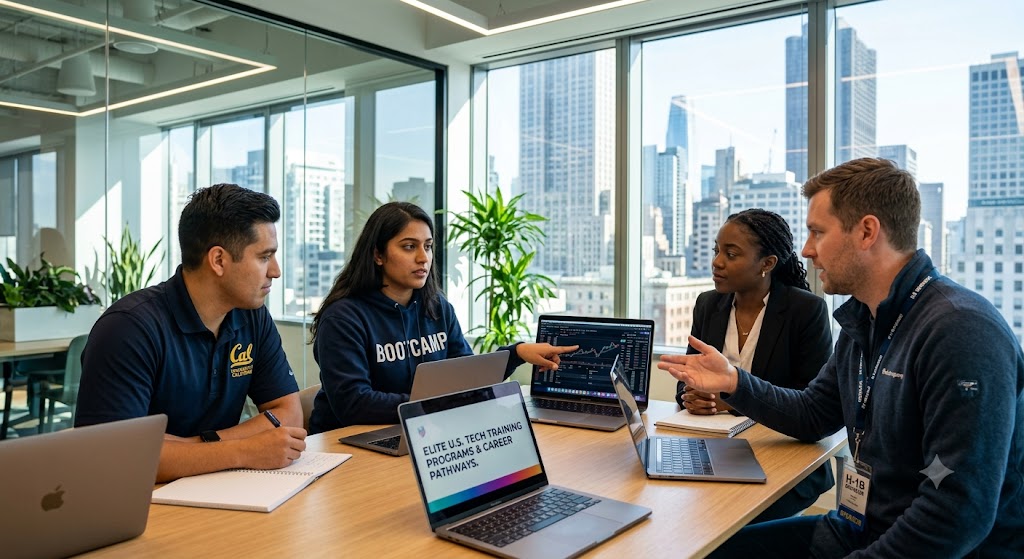
Discover the best U.S. tech bootcamps and universities offering F-1 CPT work-study opportunities and pathways to H-1B employment. Learn eligibility requirements, tuition costs, career prospects, and practical application tips for international students.
The United States continues to attract ambitious students from around the world who want to build careers in software engineering, cybersecurity, artificial intelligence, cloud computing, data science, and other fast-growing technology fields. Beyond earning a respected qualification, many international students are also looking for practical work experience that helps them transition into professional employment after graduation.
For students on an F-1 visa, programs that provide Curricular Practical Training (CPT) can offer valuable opportunities to gain industry experience while studying. Many graduates later pursue Optional Practical Training (OPT) and, where eligible, seek employers willing to sponsor an H-1B specialty occupation visa.
Choosing the right institution requires more than comparing tuition fees or rankings. International students should carefully evaluate academic quality, career services, employer partnerships, internship opportunities, CPT eligibility, graduation outcomes, and long-term career prospects.
This comprehensive guide explores some of the leading U.S. universities and technology bootcamps that prepare students for careers in technology while explaining how CPT and H-1B opportunities fit into the broader educational journey. It also provides practical advice to help prospective students make informed decisions.
Why International Students Choose U.S. Technology Programs
Technology remains one of the strongest employment sectors in the United States. Companies across nearly every industry continue to invest in software development, cloud infrastructure, cybersecurity, machine learning, data analytics, and digital transformation.
International graduates are drawn to U.S. technology programs because they often provide:
- Access to world-class faculty
- Industry-relevant curriculum
- Hands-on laboratory experience
- Internship opportunities
- Career coaching
- Networking with technology companies
- Innovation ecosystems around major cities
- Research opportunities
- Entrepreneurial communities
- Global recognition of U.S. qualifications
Many universities also maintain close relationships with employers that regularly recruit graduates through career fairs, internship programs, and campus hiring initiatives.
For students who hope to build an international technology career, studying in the United States can provide valuable technical skills, professional networks, and practical workplace experience.
Understanding F-1 CPT Work Study
One of the most frequently discussed topics among international students is Curricular Practical Training (CPT).
CPT allows eligible F-1 students to participate in work experiences that form an integral part of their academic program. Depending on the institution and degree requirements, CPT may include:
- Internships
- Cooperative education programs
- Clinical placements
- Practicum experiences
- Employer-sponsored projects
- Graduate work-study experiences
Importantly, CPT is not automatically available to every student. Eligibility depends on several factors, including:
- Maintaining valid F-1 student status
- Enrollment in an eligible academic program
- Meeting institutional requirements
- Approval from the Designated School Official (DSO)
- The work being directly related to the student’s field of study
Students should always consult their university’s international student office before accepting employment to ensure they remain compliant with U.S. immigration regulations.
Understanding the H-1B Opportunity
Many international graduates eventually hope to work in the United States after completing their studies.
One possible pathway is the H-1B visa, which allows qualifying U.S. employers to hire foreign professionals in specialty occupations that typically require at least a bachelor’s degree or equivalent.
Technology remains one of the largest sectors utilizing H-1B professionals, with positions such as:
- Software Engineer
- Data Scientist
- Machine Learning Engineer
- Cybersecurity Analyst
- DevOps Engineer
- Cloud Architect
- Systems Engineer
- AI Research Engineer
- Database Administrator
- Business Intelligence Analyst
It’s important to understand that universities and bootcamps do not sponsor H-1B visas for students simply because they enroll. Rather, graduates may become competitive candidates for employers that choose to sponsor eligible employees, subject to applicable immigration laws and annual visa processes.
CPT vs OPT vs H-1B: Understanding the Differences
Many prospective students confuse these three terms, yet each serves a different purpose.
| Program | Purpose | When It Is Used |
|---|---|---|
| CPT | Practical training that is part of an academic program | While enrolled in school |
| OPT | Temporary employment related to a student’s major | Usually after graduation (or in some cases before completion) |
| H-1B | Employer-sponsored work visa for specialty occupations | After securing qualifying employment |
Understanding these distinctions helps students build realistic educational and career plans.
Why Choosing the Right School Matters
Not every technology program provides the same student experience.
The strongest institutions typically offer:
Strong Employer Relationships
Career offices that actively connect students with employers often increase internship and employment opportunities.
Modern Technical Curriculum
Technology changes rapidly. Schools should regularly update coursework to reflect developments in AI, cloud computing, cybersecurity, software engineering, and data science.
Experienced Faculty
Faculty members with industry backgrounds often provide practical insights beyond textbook theory.
Career Development Services
Helpful services may include:
- Resume reviews
- Interview preparation
- LinkedIn optimization
- Networking events
- Career fairs
- Employer information sessions
Alumni Network
Graduates working in technology companies can provide mentorship and professional networking opportunities for current students.
Top U.S. Universities Offering Strong Technology Programs
The following institutions are widely recognized for their technology education, research excellence, and industry connections. Prospective students should review each school’s current international student policies, CPT eligibility rules, and program requirements before applying.
1. Carnegie Mellon University
Carnegie Mellon University consistently ranks among the world’s leading institutions for computer science, artificial intelligence, robotics, and software engineering.
Popular Programs
- Computer Science
- Artificial Intelligence
- Robotics
- Information Systems
- Machine Learning
- Human-Computer Interaction
- Cybersecurity
Why Students Choose CMU
The university enjoys exceptionally strong relationships with major technology employers. Students frequently participate in research, innovation projects, internships, and industry collaborations that strengthen their professional experience.
Graduates often pursue careers with leading technology firms, startups, financial institutions, and research organizations.
2. Stanford University
Located in California’s Silicon Valley, Stanford University offers students unparalleled exposure to one of the world’s most influential technology ecosystems.
Popular areas of study include:
- Computer Science
- Artificial Intelligence
- Data Science
- Software Engineering
- Electrical Engineering
- Computer Engineering
Students benefit from:
- Entrepreneurial culture
- Startup networking
- Venture capital exposure
- Innovation labs
- Research partnerships
Many successful technology founders and executives began their careers within Stanford’s innovation community.
3. Massachusetts Institute of Technology (MIT)
MIT remains internationally respected for technological innovation and scientific research.
Technology-focused students can explore fields such as:
- Artificial Intelligence
- Robotics
- Computer Science
- Data Analytics
- Computational Biology
- Electrical Engineering
- Machine Learning
MIT’s emphasis on practical problem-solving allows students to work on real-world engineering challenges while collaborating with industry and research partners.
4. Georgia Institute of Technology
Georgia Tech has built a strong reputation for producing highly employable graduates across multiple technology disciplines.
Popular degree options include:
- Computer Science
- Cybersecurity
- Information Technology
- Data Analytics
- Artificial Intelligence
- Software Engineering
Students appreciate:
- Competitive tuition relative to peer institutions
- Extensive employer recruiting
- Cooperative education opportunities
- Strong internship culture
- Excellent career placement resources
Atlanta’s growing technology sector also provides access to numerous internship and networking opportunities.
5. University of Illinois Urbana-Champaign (UIUC)
UIUC has long been recognized for excellence in engineering and computing.
Its technology graduates are highly sought after by employers in software development, cloud computing, semiconductor engineering, and artificial intelligence.
Programs include:
- Computer Engineering
- Computer Science
- Information Sciences
- Data Science
- Electrical Engineering
Students also benefit from extensive research facilities and a vibrant innovation ecosystem that encourages entrepreneurship and interdisciplinary collaboration.
What Makes a Great Tech Bootcamp?
While universities offer comprehensive degree programs, technology bootcamps focus on intensive, skills-based learning designed to prepare participants for specific technical roles. Prospective students should carefully evaluate whether a bootcamp aligns with their educational goals and visa status. Not all bootcamps qualify for F-1 student enrollment or provide pathways that include CPT-authorized training.
When evaluating a bootcamp, consider factors such as:
- Curriculum relevance to current industry needs
- Instructor experience
- Career support services
- Employer partnerships
- Graduate outcomes
- Tuition and financing options
- Program format (online, in-person, or hybrid)
- Student support resources
A well-designed bootcamp should emphasize hands-on projects, portfolio development, and practical problem-solving alongside technical instruction.
Top U.S. Tech Bootcamps for Career-Focused Learners
Technology bootcamps have become a popular option for individuals who want to develop practical, job-ready skills in a relatively short period. Unlike traditional degree programs, bootcamps are typically intensive and project-based, emphasizing real-world applications.
International students should note that bootcamps vary significantly in how they accommodate F-1 students. Some operate independently and may not issue the documentation required for an F-1 visa, while others partner with accredited institutions or are offered through universities that support eligible international students. Always verify a program’s visa eligibility and CPT policies directly with the institution before applying.
Below are several well-known bootcamps recognized for strong technical instruction and career support.
1. Flatiron School
Flatiron School is known for immersive programs that prepare students for careers in software engineering, cybersecurity, data science, and product design.
Popular Programs
- Software Engineering
- Data Science
- Cybersecurity
- Product Design
Highlights
- Project-based learning
- Career coaching
- Portfolio development
- Mock technical interviews
- Employer networking opportunities
Graduates often build professional portfolios that showcase their coding and problem-solving abilities, making them more competitive in the job market.
2. General Assembly
General Assembly has trained thousands of learners worldwide and maintains relationships with employers across various industries.
Programs Include
- Software Engineering
- UX Design
- Data Analytics
- Data Science
- Digital Marketing
- Product Management
Students appreciate the emphasis on teamwork, practical assignments, and industry-relevant projects.
Career advisors also assist learners with:
- Resume improvement
- LinkedIn optimization
- Interview preparation
- Job search strategies
- Networking techniques
3. Fullstack Academy
Fullstack Academy specializes in software engineering and cybersecurity education.
Its curriculum focuses heavily on:
- JavaScript
- React
- Node.js
- Full-stack web development
- Cloud fundamentals
- Cybersecurity practices
Students complete multiple hands-on projects that demonstrate practical programming skills to prospective employers.
4. Codesmith
Codesmith is recognized for preparing experienced programmers for advanced software engineering roles.
Its programs emphasize:
- Scalable software architecture
- JavaScript engineering
- Distributed systems
- Open-source contributions
- Technical communication
Many graduates pursue positions in software engineering, backend development, and cloud technologies.
5. Hack Reactor
Hack Reactor offers intensive coding education designed for individuals seeking careers in software engineering.
The curriculum typically covers:
- Algorithms
- Data Structures
- Full-stack Development
- JavaScript
- Python
- Artificial Intelligence fundamentals
Students spend considerable time building collaborative software projects that simulate real workplace environments.
Universities with Strong International Student Support
Academic excellence is important, but international students should also evaluate the support services available throughout their studies.
Many leading universities provide dedicated offices that assist international students with:
- Immigration guidance
- CPT authorization procedures
- OPT workshops
- Career advising
- Academic counseling
- Cultural adjustment resources
- Employment preparation
Institutions known for comprehensive international student services often make the transition to studying in the United States smoother and less stressful.
High-Demand Technology Fields in the United States
Technology continues to evolve rapidly, creating opportunities across numerous specialties. Students who develop in-demand technical and problem-solving skills may find a wider range of employment options after graduation.
Some of the fastest-growing areas include:
Artificial Intelligence
Artificial intelligence continues to influence industries such as healthcare, finance, manufacturing, education, and transportation.
Common roles include:
- AI Engineer
- Machine Learning Engineer
- Computer Vision Engineer
- NLP Specialist
Cybersecurity
Organizations increasingly invest in protecting digital infrastructure and sensitive information.
Popular careers include:
- Security Analyst
- Security Engineer
- Penetration Tester
- Incident Response Analyst
- Cloud Security Engineer
Cloud Computing
Businesses continue migrating applications and infrastructure to cloud platforms.
Skills often sought include:
- Cloud Architecture
- Infrastructure Automation
- Kubernetes
- Docker
- AWS
- Microsoft Azure
- Google Cloud Platform
Data Science
Organizations rely on data to support business decisions.
Graduates may pursue careers as:
- Data Scientist
- Data Analyst
- Business Intelligence Analyst
- Quantitative Analyst
- Data Engineer
Software Engineering
Software engineering remains one of the broadest and most resilient technology career paths.
Common specialties include:
- Frontend Development
- Backend Development
- Full-Stack Development
- Mobile Development
- DevOps Engineering
- Platform Engineering
Typical Tuition Costs
The total cost of studying in the United States varies depending on the institution, program length, and location.
Approximate annual tuition ranges are:
| Institution Type | Estimated Tuition (USD) |
|---|---|
| Public Universities | $20,000–$45,000 |
| Private Universities | $35,000–$70,000+ |
| Technology Bootcamps | $7,000–$25,000 |
Students should also budget for additional expenses such as:
- Housing
- Health insurance
- Meals
- Transportation
- Books and software
- Student fees
- Personal expenses
Creating a realistic financial plan before beginning a program can help reduce stress and support academic success.
How to Choose the Right Program
Every student has different career goals, learning preferences, and financial circumstances. Before applying, consider the following questions:
Does the curriculum match your career goals?
Review course descriptions carefully. Programs should teach current technologies that align with your intended career path.
Does the institution provide career support?
Strong career services can assist with:
- Internship searches
- Resume reviews
- Technical interview preparation
- Employer networking
- Career fairs
Are graduates employed in relevant industries?
Graduate employment outcomes may provide insight into how effectively a program prepares students for technology careers.
Does the school maintain employer partnerships?
Universities and bootcamps with established employer relationships often provide additional opportunities for internships, networking, and recruiting events.
What learning environment suits you?
Some students thrive in:
- Small class sizes
- Intensive bootcamps
- Research-focused universities
- Hybrid learning
- Online instruction
Choose an environment that complements your learning style and long-term objectives.
Building a Competitive Technology Resume
Academic performance alone is rarely enough to stand out in today’s technology job market.
Employers often look for candidates who demonstrate practical experience through projects, internships, and technical problem-solving.
A strong resume typically highlights:
- Technical skills
- Programming languages
- Academic achievements
- Internship experience
- Personal projects
- Open-source contributions
- Certifications
- Leadership activities
- Volunteer work
- Research experience (where applicable)
Whenever possible, quantify accomplishments—for example, by describing the scale of a project, technologies used, or measurable outcomes.
Networking Matters
Many technology opportunities arise through professional connections rather than online applications alone.
Students can expand their networks by:
- Attending career fairs
- Participating in hackathons
- Joining technology clubs
- Contributing to open-source projects
- Connecting with alumni
- Participating in coding competitions
- Engaging in professional communities
Building relationships early can provide mentorship, career advice, and exposure to potential employers.
Common Mistakes International Students Should Avoid
While pursuing education and career opportunities in the United States, students should take care to avoid common pitfalls:
- Assuming every program supports F-1 enrollment or CPT eligibility without verification.
- Accepting employment before receiving required authorization from the appropriate university office.
- Choosing a program based solely on marketing claims rather than curriculum quality and outcomes.
- Neglecting to build a professional portfolio alongside academic coursework.
- Waiting until graduation to begin networking or preparing for interviews.
- Overlooking the total cost of attendance, including living expenses and insurance.
- Failing to stay informed about immigration rules and institutional policies, which can change over time.
Planning ahead and seeking guidance from academic advisors and international student offices can help students make informed decisions throughout their educational journey.
Step-by-Step Application Guide
Applying to a U.S. university or technology bootcamp involves several stages. While specific requirements vary by institution, the following process provides a general roadmap for international applicants.
Step 1: Define Your Career Goals
Before submitting applications, identify the area of technology that best matches your interests and long-term objectives.
Examples include:
- Software Engineering
- Artificial Intelligence
- Cybersecurity
- Data Science
- Cloud Computing
- Information Systems
- UX/UI Design
- Product Management
Choosing a clear direction helps you compare programs more effectively and select coursework that supports your career plans.
Step 2: Research Institutions Thoroughly
Look beyond rankings and marketing materials. Evaluate factors such as:
- Accreditation
- Curriculum quality
- Faculty expertise
- Internship opportunities
- Career services
- Alumni outcomes
- Tuition and living costs
- International student support
- CPT policies
- Graduate employment statistics (where available)
Review the institution’s official website for the most up-to-date admission requirements and international student information.
Step 3: Prepare Required Documents
Most universities require several supporting documents, including:
- Completed application form
- Academic transcripts
- Degree certificates (if applicable)
- Passport identification page
- English language proficiency scores (if required)
- Statement of Purpose (SOP)
- Letters of recommendation
- Resume or CV
- Financial documentation demonstrating the ability to cover educational expenses
Requirements differ between institutions, so always confirm the current checklist before applying.
Step 4: Submit Your Application Early
Many competitive technology programs have limited spaces and fixed application deadlines.
Applying early can provide additional time to:
- Respond to document requests
- Arrange financing
- Prepare for visa interviews
- Secure housing
- Plan travel
Some institutions also offer priority consideration for scholarships or assistantships to early applicants.
Step 5: Apply for Your Student Visa
After receiving admission and the necessary enrollment documents from your institution, eligible students may apply for an F-1 student visa through the appropriate U.S. consular process.
Students should carefully follow official guidance regarding:
- Visa application procedures
- Required documentation
- Interview preparation
- Arrival timelines
- Maintaining lawful student status
Tips for Strengthening Your Application
Admission to leading technology programs can be competitive. These strategies may improve your overall application:
Write a Strong Statement of Purpose
A compelling personal statement should clearly explain:
- Why you chose the program
- Your academic interests
- Relevant experience
- Career aspirations
- How the program aligns with your long-term goals
Avoid generic statements. Instead, provide specific examples that demonstrate motivation and preparedness.
Build Technical Experience
Even before applying, you can strengthen your profile by completing personal or collaborative projects.
Examples include:
- Developing a mobile application
- Creating a portfolio website
- Contributing to open-source software
- Participating in hackathons
- Completing industry-recognized certifications
Practical experience often complements academic achievements.
Demonstrate Continuous Learning
Technology evolves rapidly. Showing a commitment to ongoing learning—through online courses, certifications, or independent projects—can reflect curiosity and initiative.
Develop Strong Communication Skills
Technical ability is important, but employers also value communication, teamwork, and problem-solving. Participating in group projects, presentations, or community activities can help demonstrate these qualities.
Frequently Asked Questions
Can international students work while studying?
Eligible F-1 students may have access to certain employment opportunities, including on-campus work and, where authorized, practical training such as CPT or OPT. Employment eligibility depends on U.S. immigration regulations and institutional policies. Students should obtain the necessary authorization before beginning any work.
Does every university offer CPT?
No. CPT availability and eligibility requirements vary by institution and academic program. Students should review the official policies of each school and consult the Designated School Official (DSO) for guidance.
Do tech bootcamps automatically qualify students for an F-1 visa?
Not necessarily. Many independent bootcamps do not issue the documentation required for an F-1 student visa. Some operate through partnerships with accredited institutions or offer programs specifically designed for international students. Always verify visa eligibility directly with the provider.
Is an H-1B visa guaranteed after graduation?
No. Completing a degree or bootcamp does not guarantee H-1B sponsorship. H-1B petitions are filed by eligible employers for qualifying positions and are subject to applicable immigration laws and, in many cases, an annual selection process.
Which technology fields currently have strong demand?
Demand varies over time, but areas such as software engineering, cybersecurity, cloud computing, artificial intelligence, data science, and information systems continue to offer a broad range of career opportunities across multiple industries.
Should I choose a university or a bootcamp?
The right choice depends on your background, goals, budget, and learning preferences.
A university degree may be more suitable if you are seeking comprehensive academic training and research opportunities. A bootcamp may appeal to learners who already have foundational knowledge and want intensive, skills-focused instruction. Consider accreditation, career support, and visa implications before making a decision.
Final Thoughts
The United States remains one of the world’s leading destinations for technology education, offering diverse pathways for students interested in software development, artificial intelligence, cybersecurity, cloud computing, and data science.
Whether you choose a research university or a career-focused bootcamp, success depends on selecting a program that aligns with your goals, developing practical skills through projects and internships, and making full use of career services and networking opportunities.
International students should also remain informed about institutional policies and U.S. immigration requirements, ensuring they understand how opportunities such as CPT, OPT, and employer-sponsored work visas fit into their broader educational and professional journey.
By planning carefully, building a strong technical portfolio, and continuously expanding your skills, you can position yourself for a rewarding career in the global technology industry.

Leave a Reply